
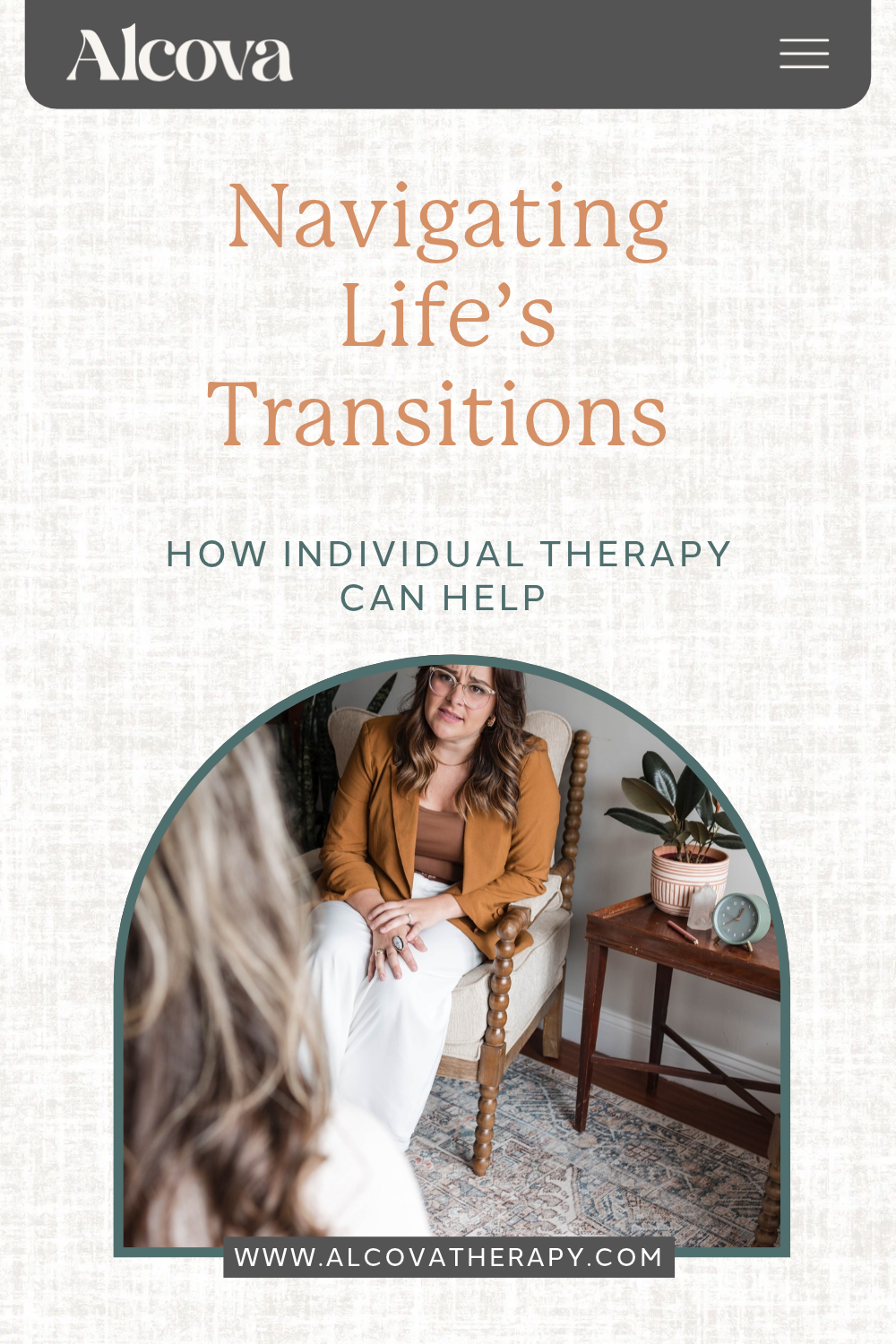
A promotion you worked hard for can leave you unexpectedly lonely. A move to Charleston can be exciting and disorienting at the same time. Becoming a parent, ending a relationship, grieving someone you love, or realizing your career no longer fits can all reshape the way you see yourself. Individual therapy for life transitions offers a private, supportive, and intentional place to make sense of that change rather than simply pushing through it.
Life transitions are not only about what is happening around you. They often bring forward questions that have been waiting underneath the surface: Who am I now? What do I want? Can I trust myself to make this decision? Why does this feel harder than I expected?
A skilled therapist can help you meet those questions with curiosity and direction. Therapy is not about being told what choice to make. It is about understanding your emotional experience, recognizing the patterns that influence your choices, and moving toward a life that feels more aligned with your values.
Why change can feel so destabilizing
Even positive changes ask something of us. A new role may require more confidence, boundaries, or visibility than you are used to. Marriage may bring joy while also surfacing fears about dependence, conflict, or being fully known. Leaving a familiar city can create freedom and grief in the same week.
Your nervous system does not sort transitions into neat categories of good or bad. It responds to uncertainty, loss of routine, new demands, and shifts in connection. That is why you may feel anxious during a change you wanted, or sad at a milestone you believe you should be celebrating.
Transitions can also reactivate earlier experiences. Someone who felt responsible for everyone else as a child may struggle to ask for help after becoming a parent. A person whose needs were dismissed in past relationships may find a career change brings an intense fear of disappointing others. These responses are not signs that you are failing. They are often understandable attempts to protect yourself based on what you have learned.
When individual therapy for life transitions can help
You do not need to be in crisis to benefit from therapy. Sometimes the signal is subtle: you are functioning, but you feel disconnected from yourself. Other times, the need is more immediate. Sleep has changed, anxiety is taking up more space, conflict is escalating, or you cannot seem to settle after a major loss or decision.
Individual therapy can be especially helpful when a transition has brought persistent worry, grief, irritability, indecision, emotional numbness, or a sense of being stuck. It can also support you when you are carrying competing feelings that do not fit a simple story. You can love your new baby and miss your old life. You can feel relieved to leave a relationship and still mourn it deeply. You can be grateful for a new opportunity and resent what it costs.
Making room for complexity is often part of the healing. When people feel pressured to be certain, grateful, or composed, they may turn against their own emotions. Therapy creates space for a more honest response, with compassion and without judgment.
Therapy offers more than a place to talk
Supportive conversation matters, but meaningful therapy also needs a clear direction. At Alcova Therapy, this means pairing relational warmth with evidence-based care that helps clients understand what is happening and practice new ways of responding.
Acceptance and Commitment Therapy, often called ACT, can be particularly useful during periods of change. ACT helps people notice difficult thoughts and feelings without allowing those experiences to dictate every decision. Rather than waiting for anxiety to disappear before taking action, you can learn to make room for discomfort while choosing steps connected to your values.
For example, someone considering a career shift may notice thoughts such as, “I am too late,” or, “I will disappoint everyone.” Therapy does not require arguing those thoughts away or pretending they are irrational. Instead, it can help you recognize them as thoughts, understand what they are trying to protect, and decide whether following them moves you toward the life you want.
Emotionally Focused Therapy, or EFT, can also be valuable when a transition affects your closest relationships. Changes in work, health, family structure, or identity often alter how partners communicate and seek support. Individual therapy can help you identify the emotions beneath defensiveness, withdrawal, people-pleasing, or conflict so you can express your needs more clearly and connect more securely.
The right approach depends on what you are facing. A recent move may call for building routines and community while processing loneliness. A divorce may involve grief, identity rebuilding, co-parenting concerns, and healing old relational wounds. A therapist should not force every experience into the same framework. Effective care is structured, but it remains responsive to you.
What the work may look like
The first phase of therapy often involves slowing down enough to understand the transition in context. What changed? What has this change asked of you? What feels most painful or uncertain? What strengths, relationships, and values can support you now?
From there, therapy may focus on the emotional patterns that make the transition harder. You might explore why uncertainty leads you to overwork, why conflict makes you shut down, or why achievement has become tied to your sense of worth. This is not about assigning blame. It is about gaining enough clarity that your automatic responses no longer have to run the show.
The work can also be practical. You may practice setting a boundary with family, having a more vulnerable conversation with a partner, creating a routine that supports your mental health, or making a decision without seeking complete certainty. Small actions matter because they build evidence that you can tolerate discomfort and care for yourself within it.
Progress is rarely a straight line. Some sessions may bring relief and momentum; others may bring sadness as you acknowledge what has ended. Both can be part of purposeful growth. The goal is not to make every transition painless. It is to help you move through change with greater steadiness, self-understanding, and choice.
Choosing support that feels both safe and purposeful
A good therapeutic relationship should feel emotionally safe, but safety does not mean avoiding difficult material. It means having a clinician who listens carefully, respects your pace, and can help you stay grounded when the work becomes tender. It also means knowing there is a reason for the questions being asked and a thoughtful path forward.
When looking for a therapist, consider whether they can clearly explain how they work with anxiety, grief, relationship patterns, trauma, or the concern bringing you in. Notice whether you feel understood during an initial conversation. Credentials and clinical training matter, and so does the human experience of feeling met rather than managed.
It is also reasonable to ask about logistics. Some transitions require short-term support around a specific decision, while others uncover patterns that deserve more sustained attention. Frequency, goals, and pace should be discussed openly. Therapy works best when it is collaborative rather than prescriptive.
You do not have to have the next chapter figured out
Many people delay therapy because they believe they should wait until they can name the problem clearly. But uncertainty itself can be a meaningful reason to begin. You do not need a polished explanation for why you are struggling, and you do not need to earn support by reaching a breaking point.
A life transition can be an invitation to listen more closely to yourself: to what hurts, what matters, what you are ready to release, and what you hope to carry forward. With compassionate, intentional support, change can become more than something you endure. It can become a place to practice trusting your own capacity for a meaningful next step.
